
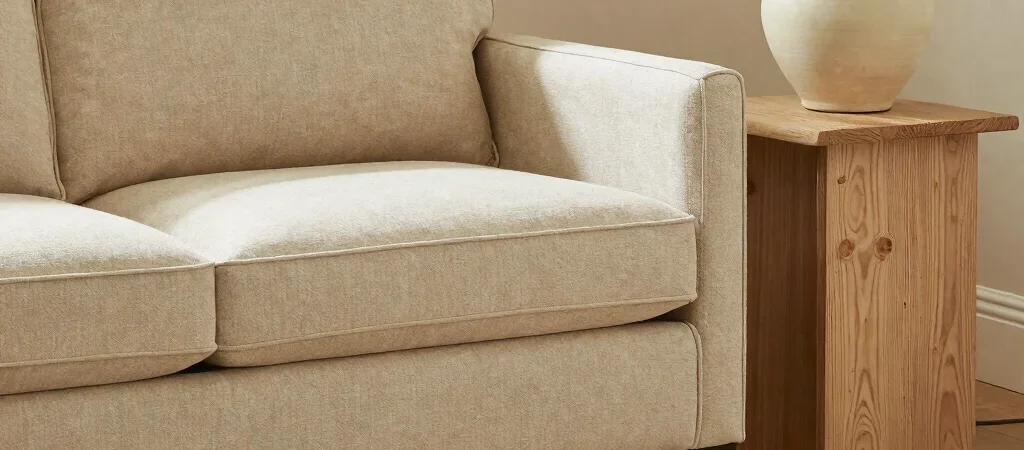
The tricky part of a beige living room is not choosing a shade; it is keeping the room from becoming a single soft blur. When the sofa, rug, and walls are all quiet, texture has to do the work that strong color might do elsewhere.
Give each surface a role
Try a nubby wool or cotton rug beneath a smoother linen sofa, then add a wood table with a visible grain. A matte ceramic lamp introduces another finish without asking for attention. The contrast is subtle, but it helps the eye distinguish one part of the room from another.
Vary the beige, gently
Beige does not have to mean matching everything to the same undertone. A sandy rug, an oatmeal cushion, and a warmer cream wall can sit comfortably together if the materials differ and the overall contrast stays soft. Before buying another cushion, place the samples side by side in daylight; undertones that look alike under store lighting can shift at home.
Edit before adding more
A useful Shop This Look edit should make the materials and styling choices easy to understand, not imply that every item is required. If you use affiliate links, disclose them clearly; links to selected pieces may earn Nestora Home a commission. Start with the largest surface you want to change, such as the rug, and add smaller accents only if the room still feels unfinished.


